

Your Complete Spring Planting Guide for Pacific Northwest, WA: Expert Tips and Localized Solutions from Northwest Landscape Supply
Spring brings fresh growth across the Pacific Northwest, WA. At Northwest Landscape Supply, we provide you with clear, practical advice for spring planting tailored to our region’s climate and soils. You’ll find the best planting windows, soil-preparation steps, and native plant recommendations. Many gardeners struggle with timing and soil readiness; our guide addresses those issues and shows how to build a healthy, productive garden. We cover the planting calendar, useful soil amendments, pest control tactics, and how our company can support your projects.
Whether you are a first-time gardener or maintaining an established landscape, planning and preparation are the two most reliable ways to improve outcomes. We emphasize simple checks you can perform at home—soil testing, observing microclimate differences on your property, and scheduling planting tasks—plus practical how-tos for seed starting, transplanting, irrigation setup, and ongoing maintenance. Where appropriate, we include step lists and examples to make actions easy to follow and repeat each season.
When is the Best Time for Spring Planting in the Pacific Northwest, WA?
Timing matters for successful spring planting in the PNW. The region’s climate varies, so local conditions affect when to sow or transplant. In general, plan planting from late March through May, adjusting for your specific site. This window helps plants establish roots before summer heat.
Two simple indicators help decide when to plant: soil temperature and consistent night temperatures. Most cool-season crops will germinate and grow well when soil temperatures are above about 40°F, while warm-season crops reliably establish when soil is consistently warm and night frosts have passed. You can use a soil thermometer placed 2–4 inches into the root zone to verify conditions for seed germination or transplanting. In coastal areas and low elevations, spring can arrive earlier than in inland valleys or higher elevations where frost lingers later into spring.
Microclimates on your property—south-facing slopes, areas near heat-retaining walls, or sheltered corners—will warm earlier and can support earlier plantings. Conversely, cold pockets, shaded areas, and heavy clay soils may require later planting or additional soil amendment to warm and drain properly. Observe your garden over a few seasons to map these microclimates; that map will be one of your best tools for timing plantings precisely.
How Does the PNW Spring Planting Calendar Guide Your Garden Schedule?
The PNW planting calendar is a practical timeline for crop tasks. Sow cool-season crops like peas and lettuce as early as mid-March. Plant warm-season crops, such as tomatoes and peppers, after the last frost, usually in late April to early May. Watch local forecasts and adapt the calendar to actual weather.
For home gardeners, a simplified month-by-month sequence keeps work manageable and helps stagger harvests for continuous production. Consider this practical timeline as a starting point and slide tasks earlier or later based on local frost dates and soil conditions:
- February–March: Start seeds of cool-season crops (lettuce, spinach, brassicas) indoors or in protected cold frames. Prepare beds: remove winter debris, perform a light till or fork to loosen compacted soil, and apply compost to raise organic matter.
- March–April: Direct-sow peas, radishes, beets, and certain root crops when soil is workable. Begin planting onion sets and early potatoes when soil is dry enough to avoid clumping. Harden off seedlings started indoors by gradually exposing them to outdoor conditions.
- Late April–May: Transplant tomatoes, peppers, basil, and other warm-season crops after danger of frost has passed locally. Mulch transplants to conserve moisture and prevent soil splash. Install supports for vining crops at planting time to avoid root disturbance later.
- May–June: Continue succession plantings for crops like lettuce and carrots to extend harvest windows. Install irrigation systems and mulch beds to reduce early summer watering needs.
When starting seeds, pay attention to sowing depth and spacing printed on seed packets: most small seeds need only a thin covering of soil, while larger seeds require 1–2 inches of depth. Label trays and beds to avoid overplanting similar varieties and to plan rotations that reduce pest buildup.
For a month-by-month plan and step-by-step instructions, detailed regional guides provide practical, hands-on direction. You can find these resources through Northwest Landscape Supply’s website and local extension services.
What Climate Zones Affect Planting Dates in Seattle, WA and Surrounding Areas?
Seattle, WA and nearby areas span several climate zones that affect planting dates. Much of the region falls in USDA Zones 8a to 8b. Zone 8a offers a longer growing season and supports a wider range of plants. Gardeners in warmer zones can start earlier, while those in cooler pockets may wait until late April for best results.
USDA zones describe average minimum winter temperatures and help select plants that will survive the coldest nights. However, they do not capture summer heat, rainfall patterns, wind exposure, or microclimates. Use zone guidance for initial plant selection, then refine choices using local observations: which plants in your neighborhood thrive, which slopes warm fastest, and which low spots stay soggy after rain.
For multi-year planning, note long-term trends: some gardeners shift toward earlier seed-start dates for sheltered beds or choose more drought-tolerant cultivars for exposed sites. Keep a garden journal recording planting dates, first and last frost dates, and harvest yields; this record will help refine schedules season to season.
How to Prepare PNW Soil for Successful Spring Planting?

Soil preparation is essential for spring success. Healthy soil supplies nutrients and proper structure for roots. Start with a soil test to check pH and nutrient levels. Use the results to plan targeted amendments.
Collect soil samples from multiple spots in each bed (five to eight cores mixed for an average sample) and send them to a local extension service or soil lab. Typical test results will report pH, organic matter percentage, and levels of key nutrients such as nitrogen (N), phosphorus (P), and potassium (K). Labs often recommend amendment rates to adjust pH or nutrient levels; follow local recommendations rather than generic national guidelines because regional soils behave differently.
When planning amendments, prioritize building organic matter first. Organic matter improves aeration and drainage in heavy soils, increases water retention in sandy soils, and supports microbial life that helps plants access nutrients. Aim to add well-composted material rather than fresh manure or uncomposted yard waste to avoid temporary nitrogen tie-up and weed seeds.
What Are the Best Soil Amendments for Pacific Northwest Gardens?
Use organic matter, such as compost or well-rotted manure, to improve soil structure and fertility. If tests show pH issues, small amounts of lime can help make nutrients more available. Regular additions of organic matter also improve moisture retention and plant vigor.
Practical amendment options include:
- Compost: Apply 1–3 inches of finished compost over beds each year and work it lightly into the top few inches. Compost improves structure, feeds soil biology, and reduces the need for synthetic fertilizer when used consistently.
- Cover crops: Plant winter cover crops (clover, vetch, oats) to protect soil, add organic matter, and fix nitrogen. Incorporate green manures in spring before they set seed to return nutrients to the soil.
- Lime or sulfur: Adjust pH only when tests indicate a need. Small, staged adjustments across seasons are better than large, one-time applications.
- Targeted mineral amendments: Bone meal, rock phosphate, or greensand can be used if tests show specific deficiencies; consult local extension guidance for rates.
For heavy clay, incorporating coarse organic matter and planting deep-rooted cover crops can help break up compaction over time. For sandy, fast-draining soils, focus on materials that increase water-holding capacity such as compost and well-decomposed organic matter.
How to Use Mulch and Rocks to Improve Soil Moisture and Garden Bed Health?
Mulch and decorative rock both help soil health and moisture control. Apply organic mulch—shredded leaves or bark—to conserve moisture and suppress weeds. Use decorative rocks to improve drainage in beds prone to waterlogging. Keep mulch a few inches away from plant stems to prevent rot.
Recommended mulch practices for PNW gardens:
- Apply a 2–4 inch layer of organic mulch around perennials and annual beds after soil has warmed. Pine fines, shredded hardwood, and leaf mulch are all suitable and break down to feed the soil over time.
- Maintain a mulch-free ring of 2–3 inches around tree and shrub stems to prevent moisture-related stem rot and rodent damage.
- Use gravel or decorative rock selectively: in drainage swales, rock gardens, and on sloped areas where soil loss is a concern. Rocks warm slowly in the spring and may delay soil warming directly beneath them, so use them where cooler conditions are acceptable.
- For paths and high-traffic areas, consider weed-suppressing fabric under a layer of gravel, but avoid fabric beneath planted beds to allow root and earthworm movement.
Which Native and Best Spring Flowers Thrive in Pacific Northwest Gardens?
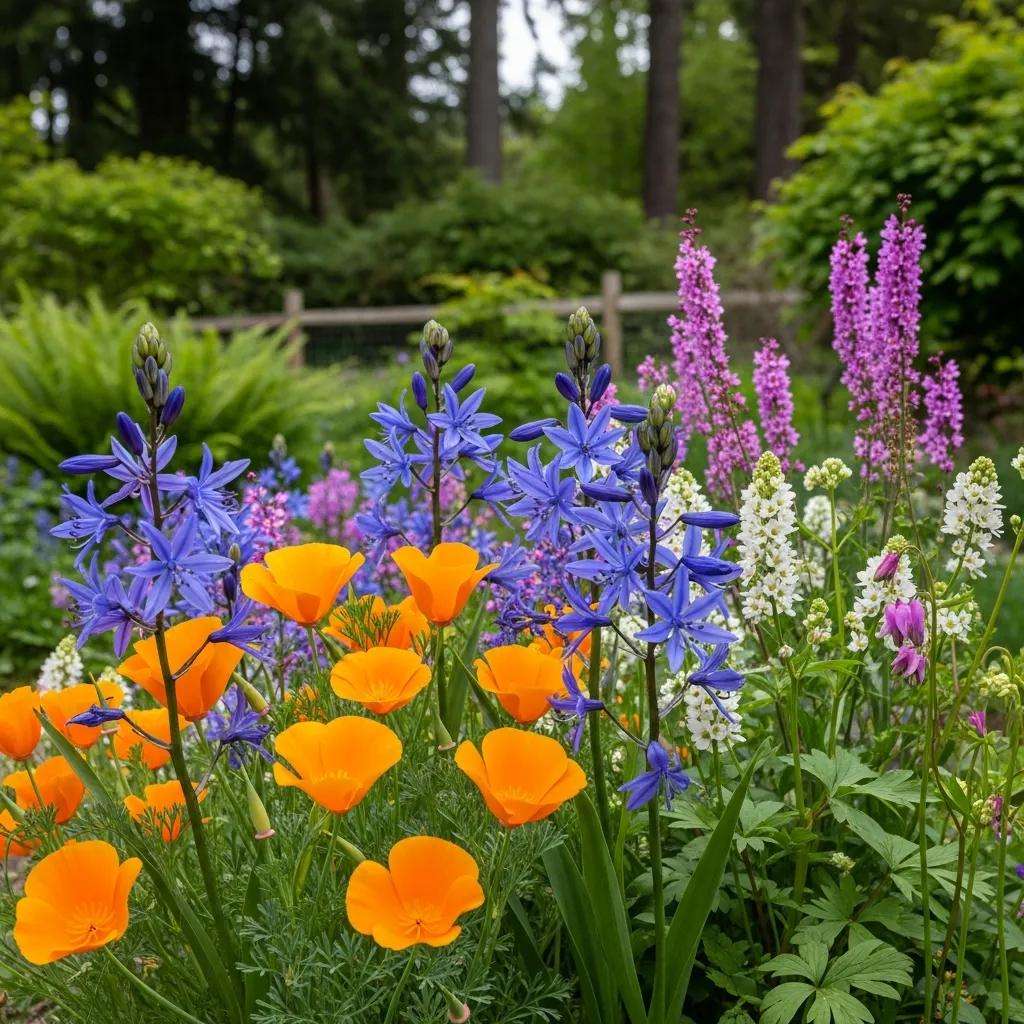
The PNW supports many native spring flowers that suit local conditions. Planting natives boosts garden beauty and helps local ecosystems. Native species are adapted to regional soils and climate, so they usually need less water and care than non-natives.
When selecting native flowers, consider the plant’s preferred soil moisture, light exposure, and mature size. Group plants with similar needs to reduce supplemental irrigation and maintenance. Natives are particularly effective in mixed borders, rain gardens, and buffer strips where they support pollinators and beneficial insects.
What Native Plants Are Ideal for Sustainable PNW Gardens?
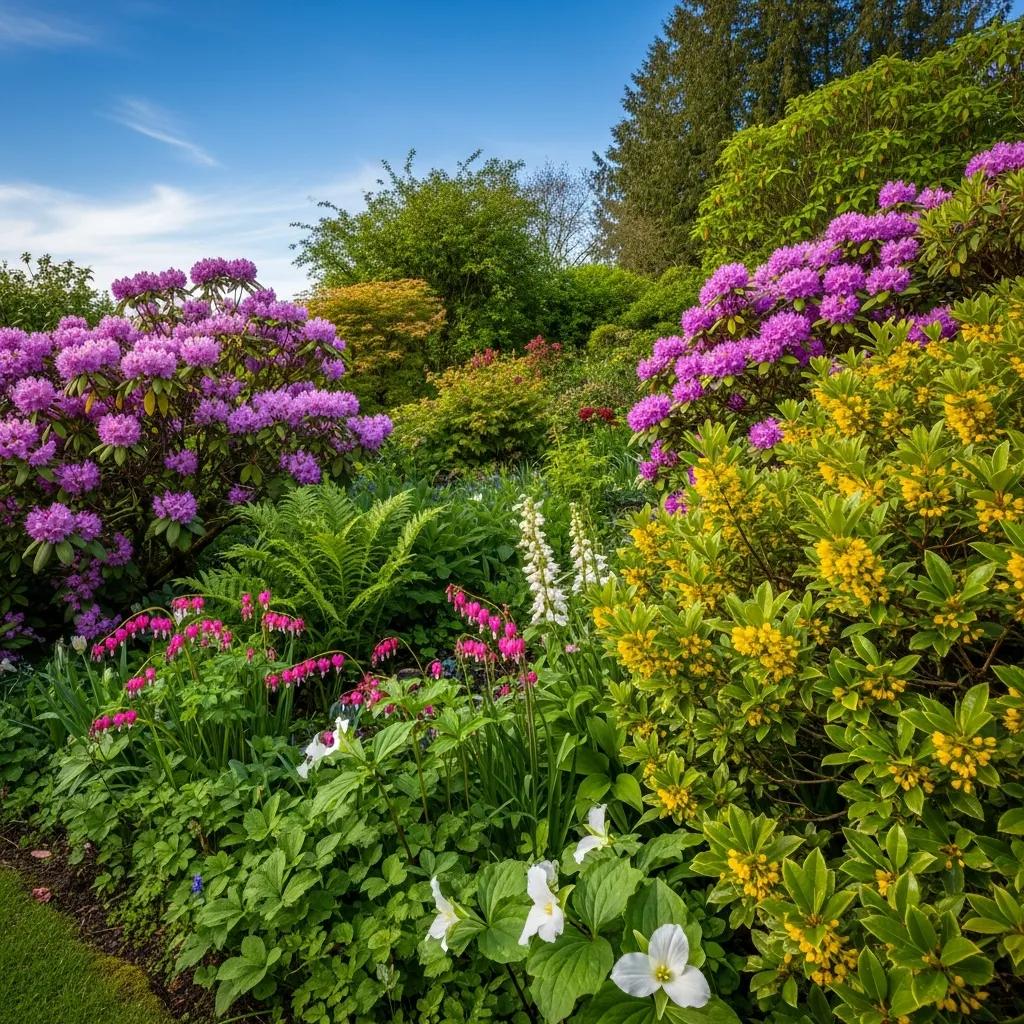
Choose natives like Pacific Rhododendron and Oregon Grape for sustainable beds. They offer visual interest and habitat for wildlife. These species match regional soils and climate, need less irrigation, and tend to resist local pests and diseases.
Other regionally appropriate choices include spring-blooming bulbs and wildflowers that perform well with minimal care: camas (Camassia), trilliums in shaded beds, and native penstemons in well-drained spots. For pollinator-friendly plantings, include a mix of early, mid, and late spring bloomers to provide continuous nectar and pollen sources.
How to Select Popular Spring Flowers for PNW Garden Aesthetics?
Pick flowers for colour, bloom time, and compatibility. The California Poppy and Camas Lily add bright spring colour. Combine plants that bloom at different times to keep continuous colour through spring and into summer. Plan groupings that match height, light needs, and soil preference for a harmonious design.
Design tips for aesthetic and ecological success:
- Plant in drifts rather than single specimens to create visual impact and make maintenance easier.
- Layer heights—low groundcovers and bulbs in front, medium perennials in the middle, taller shrubs or early-flowering trees in the back—to create depth and shelter for smaller plants.
- Include evergreens and structural plants to maintain winter interest and provide habitat.
- Use native grasses and sedges to transition between flower beds and lawn or meadow areas; they add texture and stabilize soil.
What Are Effective Pest and Disease Management Strategies for PNW Spring Gardens?
Pest and disease control protects plant health in the PNW’s mild climate. Take a proactive approach: know common threats and act early to reduce damage.
Integrated Pest Management (IPM) is the best long-term strategy. IPM combines these steps: prevention through good sanitation and crop rotation; early detection through regular scouting; mechanical and cultural controls such as barriers and trapping; biological controls like encouraging predators and parasitoids; and targeted organic treatments when necessary. Keeping plants healthy—proper spacing, correct fertility, and regular mulching—reduces susceptibility.
How to Identify Common Spring Pests in the Pacific Northwest?
Look for common pests such as aphids, slugs, and spider mites. Check plants often for symptoms like wilting, chewed leaves, or visible insects. Early detection lets you treat problems before they spread.
Make scouting routine: walk beds every week during the active season and inspect the undersides of leaves, the base of stems, and new growth. Keep a small notepad or phone log of pest sightings and treatments used; tracking outcomes helps you refine choices in subsequent seasons. Take samples or photos to local extension services for identification if uncertain.
What Organic and Reliable Treatments Protect Your Garden?
Use organic options like neem oil, insecticidal soap, and diatomaceous earth to control pests safely. Apply treatments to affected plants and follow label directions to protect beneficial insects. Regular monitoring and prompt action are key to effective control.
Practical application tips:
- Apply insecticidal soaps and oils in the cooler parts of the day to avoid leaf burn; repeat applications at recommended intervals until the pest is controlled.
- For slugs and snails, use copper barriers, hand-picking, and traps (beer traps or inverted boards) early in the evening when slugs are most active. Avoid broad-spectrum baits that harm wildlife.
- Encourage beneficial insects by planting nectar sources and avoiding unnecessary insecticide sprays. Predatory beetles, lacewings, and parasitic wasps can significantly reduce pest populations if their habitat and food are present.
- Rotate crops and stagger planting dates to break pest life cycles and reduce seasonal pressure on vulnerable crops.
How Can Northwest Landscape Supply Support Your Spring Planting Projects?
At Northwest Landscape Supply, we help with quality materials and expert advice for your spring projects. Our products and guidance are chosen to meet PNW gardening needs.
For many gardeners, sourcing consistent, screened topsoil or clean compost can be one of the most time-consuming tasks of a landscape project. We simplify logistics by offering bulk delivery, a range of soil blends, mulches, and decorative rock that suit regionally common conditions. Ask us for recommendations on blends tailored for raised vegetable beds, native plantings, or lawn renovation so that you get a product suited to your goals rather than a one-size-fits-all approach.
Which Quality Products Are Available for Soil, Mulch, and Decorative Rocks?
We offer weed-free topsoil, nutrient-rich compost, and several mulch options. Decorative rocks are available to improve bed drainage and visual appeal. These materials support healthy growth and long-lasting landscapes.
When choosing materials, consider the following:
- Topsoil and planting mixes: For vegetable beds, select a screened, loamy topsoil blended with compost for immediate fertility and structure. For native shrubs and perennials, a leaner, well-draining mix is often better.
- Mulch selection: Choose bark or shredded hardwood for ornamental beds and leaf mulch for vegetable areas. Avoid fresh wood chips too close to tender seedlings until partially broken down.
- Rocks and hardscape: Use gravel in french drains and around foundations to reduce waterlogging; select larger river rock or crushed stone for paths and accents depending on desired texture and maintenance.
What Delivery Services and Expert Guidance Does Northwest Landscape Supply Offer?
We provide reliable delivery so materials arrive when you need them. Our staff offer personalized recommendations based on your site and goals. That combination of products and local expertise makes projects run more smoothly.
When scheduling delivery, plan for access constraints: measure gate widths, driveway grades, and turning radii so we can confirm vehicle access. Have a designated drop zone and a wheelbarrow or small loader ready to distribute materials quickly while our delivery crew is on site. If you are building raised beds or doing a large planting, ask about staged deliveries over several weeks to reduce on-site congestion and spoilage.
What Are the Latest Trends and Best Practices for Sustainable Spring Gardening in the PNW?
Sustainable gardening is growing as people aim to reduce environmental impact. Adopting current best practices helps you create an eco-friendly, low-maintenance garden.
Adopting simple water-wise strategies and prioritizing soil health are two of the highest-impact practices. In the PNW, capturing winter rain in soil and avoiding unnecessary summer irrigation reduces demand on municipal water supplies and promotes plants that tolerate occasional summer droughts once established. At the same time, building soil organic matter improves drought resilience and reduces the need for frequent fertilizer applications.
How Does Climate-Adaptive Planting Enhance Garden Success?
Climate-adaptive planting means choosing species suited to local climate and soils. That reduces water and maintenance needs. Selecting native and drought-tolerant plants builds resilience as conditions change.
Some practical climate-adaptive strategies include:
- Grouping plants by water needs into hydrozones so irrigation can be zoned and minimized.
- Choosing deep-rooted perennials and shrubs for slopes to reduce erosion and improve infiltration.
- Installing drip irrigation with timers or smart controllers that adjust to rainfall and soil moisture rather than running a fixed schedule.
- Using mulch generously to reduce evaporation and moderate root-zone temperatures.
What Are Recommended Organic Soil Amendments and Sustainable Materials?
Add organic amendments like compost and green manures to boost nutrients and microbial activity. Use sustainable materials—recycled mulch and locally sourced rocks—to lower environmental impact while keeping your garden attractive.
Consider these sustainable material choices:
- Compost made from local green waste reduces transport emissions and supports a circular material flow.
- Reclaimed or locally quarried stone for paths and retaining walls reduces embodied energy compared with imported materials.
- Natural fiber erosion control blankets and coir logs in sensitive areas provide temporary stabilization while native plants establish.
Get Started with Northwest Landscape Supply for Your Spring Garden
Ready to transform your garden this spring? At Northwest Landscape Supply, we are committed to supporting you with expert advice, quality materials, and reliable delivery tailored to the Pacific Northwest, WA. Whether you need soil, mulch, decorative rock, or planting guidance, we are here to help you succeed.
Contact us today to discuss your project and discover how our locally sourced products and personalized service can make your spring planting easier and more productive. Let’s grow a healthy, beautiful garden together.